Is Your Hot Water Too Hot? What Sydney Homeowners Should Know About Tempering Valves | Sterling Gas, Hot Water & Leak Detection
Is Your Hot Water Too Hot? What Sydney Homeowners Should Know About Tempering Valves
Turn on the hot tap and within a few seconds the water is almost too hot to keep your hand under — most Sydney homeowners have experienced this and just assumed it’s how hot water systems work. In a sense, it is: your hot water unit is deliberately set to store water hotter than you’d ever want coming out of a tap. The issue is that gap between tank temperature and a safe showering or handwashing temperature needs to be managed properly, and when it isn’t, scalding becomes a real risk rather than a theoretical one.

Why Hot Water Systems Run Hotter Than You’d Expect
Hot water storage tanks hold a large volume of water sitting at a steady temperature for hours at a time — exactly the kind of environment bacteria like Legionella can thrive in if the water isn’t kept hot enough. To manage that risk, hot water systems — gas, electric or heat pump — are generally run hotter inside the tank than anyone would want coming straight out of a tap or shower head.
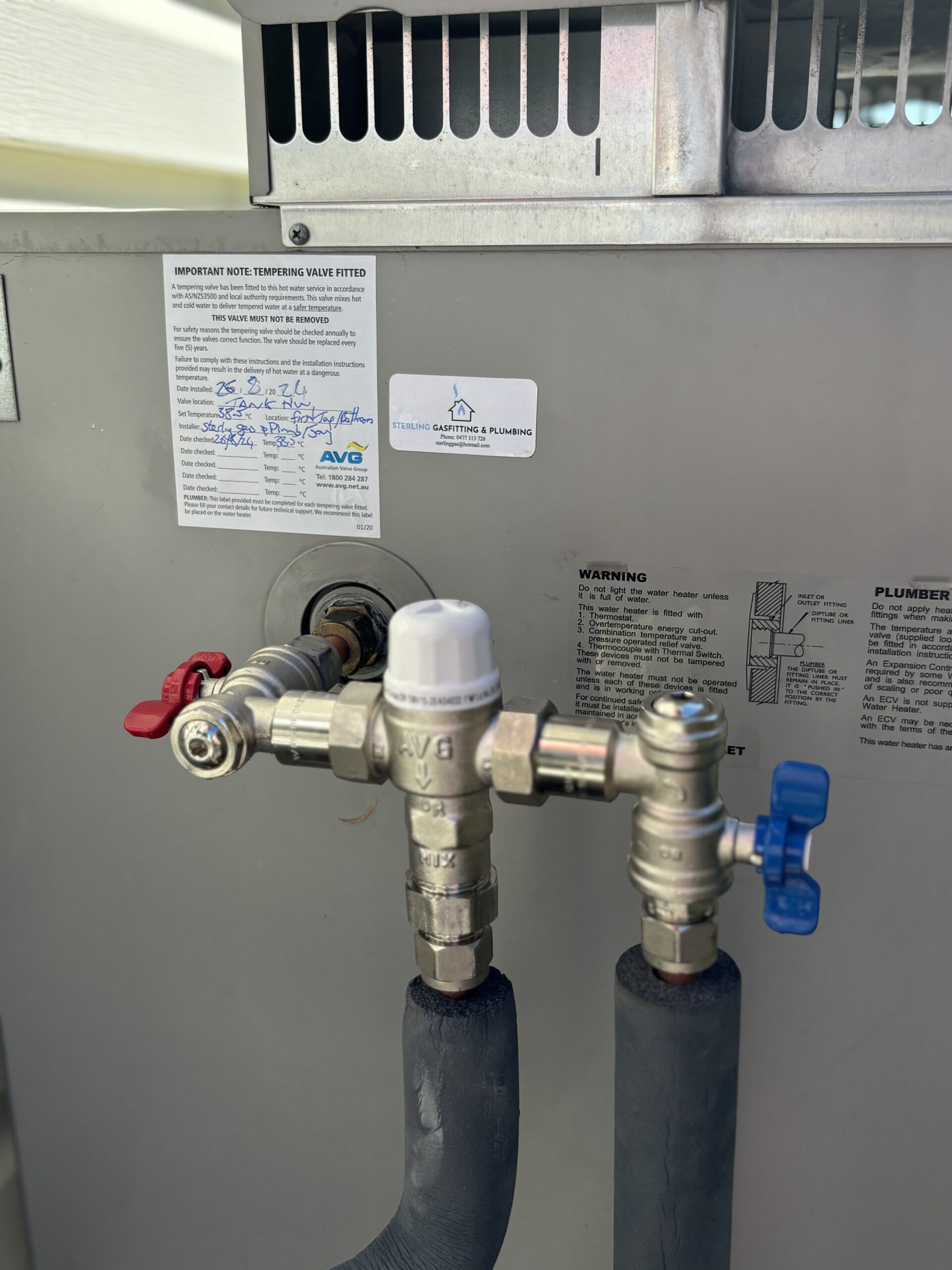
That’s where a tempering valve (sometimes called a thermostatic mixing valve) comes in. It sits between the hot water unit and your taps, blending the hot water with a little cold right before it’s delivered. That way, the water inside the tank stays hot enough to control bacteria, while the water actually reaching your hands, your shower or your bath is brought down to a more comfortable, safer temperature.
Why This Actually Matters: Scalding Happens Faster Than You’d Think
Hot water doesn’t need to be extreme to cause a burn — it just needs to be hotter than skin can safely tolerate for more than a moment, and that threshold is lower than most people assume, especially for:
- Young children, whose skin is thinner and burns more easily and quickly than an adult’s
- Older family members, who often have thinner skin and may be slower to move away from heat
- Anyone with diabetes, nerve damage, or reduced skin sensitivity, who may not feel how hot the water really is
- People with limited mobility in the shower or bath, who can’t move away from a sudden temperature spike as quickly
This is one of the main reasons tempering valves are now standard in new bathroom installations, and why they’re worth checking for if your home — or a rental property you own — has young children, older residents, or anyone in one of these groups living there.
What You Can Safely Check Yourself
You don’t need any tools or technical knowledge to get a feel for whether this is worth looking into:
- Notice how quickly your hot tap or shower becomes uncomfortably hot — if it’s almost instant and stays that way, it’s worth a closer look
- Look near your hot water unit for a small brass fitting, sometimes labelled, that may be the tempering valve — if you can’t spot one and your system is older or hasn’t been serviced in a while, you may not have one fitted at all
- Keep an eye out for water temperature that swings between hot and cold rather than staying steady, which can mean a valve isn’t blending properly
- If you’re renovating a bathroom, laundry or kitchen, or installing a new hot water system, ask whether a tempering valve is included in the job
What’s not a good idea is trying to adjust your hot water system’s thermostat yourself to “fix” the problem. Turning the tank temperature down to make the tap water feel safer can undo the very thing that’s keeping the stored water free of bacteria — getting that balance right safely is exactly what a tempering valve is for.
When to Call a Licensed Plumber
Testing the actual temperature of the water coming out of your taps, and installing, servicing or adjusting a tempering valve, is licensed plumbing work. A licensed plumber can measure what’s really happening at your outlets, confirm whether your home has a working valve, and fit or repair one so your system stays safe at both ends — hot enough in the tank, safe enough at the tap. It’s worth having checked if it’s never been tested, if you’re renovating, or if there are young children, older residents, or anyone with reduced sensitivity to heat living in the home.
Book a Hot Water Safety Check
Sterling Gas, Hot Water & Leak Detection services homes across Sydney and can test your hot water temperature and install or service a tempering valve as part of a routine check. If you’ve never had this looked at — or something about your hot water just doesn’t feel right — get in touch and we’ll make sure it’s both efficient and safe.